
This is the fourth entry in our recurring series making the case for why we should care about each of Tech’s new Sun Belt conference mates. You can find last week’s here!
There is a Jonesboro twenty-two miles from Ruston. Head straight down Trenton or Vienna, whichever one goes south (I can never keep them straight) and you’re there in 25 minutes. Maybe 27 if traffic is bad.
But that’s not the Jonesboro we’re talking about today. To get to this Jonesboro, you take whichever of Trenton or Vienna we didn’t take the first time, drive north until it becomes US-63 at the I-20 interchange, and then stay on that federal highway for a solid two hundred and ninety more miles.
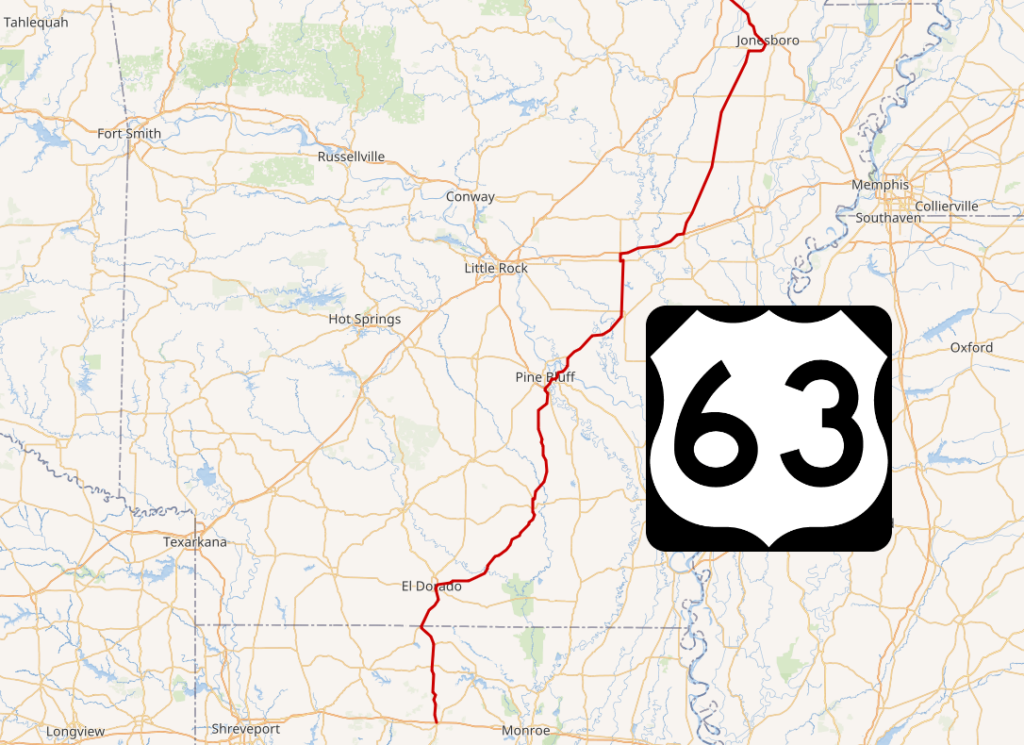
But I really shouldn’t complain. That’s only a handful of miles farther than Sam Houston, the closest Conference USA opponent we had last year. So let’s talk about the team from the slightly-further-away Jonesboro.
Reason 1: The "One and Done"
Grievance Rating: 6/10
Like we have often in this series, let’s start with the scoreboard.
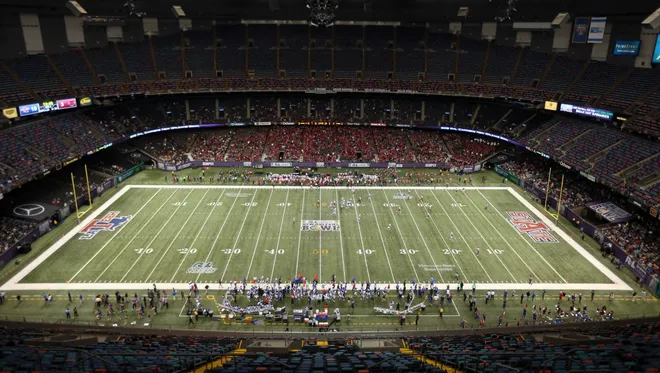
In football, Louisiana Tech leads the all-time series 26-12. In men’s basketball, Tech leads 42-26. In baseball, it’s 76-37 Tech. And in women’s basketball, where the Lady Techsters have made a habit of this sort of thing for fifty years, it’s 40-4. Add it up and across the four major sports, Arkansas State has beaten Louisiana Tech a combined 79 times and lost 184. That is not a rivalry record. That’s a buy game.
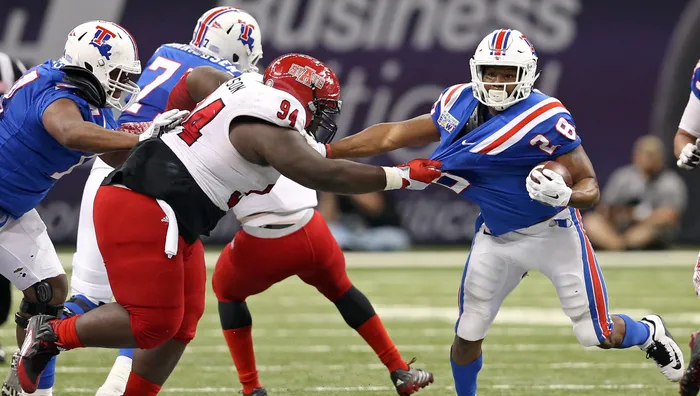
Here’s the thing though. There was a stretch where Arkansas State was genuinely, legitimately good. From 2011 to 2013, the Red Wolves won or shared three straight Sun Belt titles and went to three straight bowl games. On paper, that’s the best run in the modern history of the program.
And they couldn’t hold onto any of it, because their coaches would not stop leaving.
Hugh Freeze won the Sun Belt in 2011 and left for Ole Miss, where I’m sure nothing notable happened. Gus Malzahn won the Sun Belt in 2012 and left for Auburn, where he played for a national title in his very first season. Bryan Harsin won a share of the Sun Belt in 2013 and left for Boise State. Three consecutive head coaches, three consecutive one-year stays, three consecutive doors hitting them on the way out.
Which is the part that should feel good and doesn’t, because Ruston knows exactly what that’s like. Tech has been a launching pad too. We have hired good coaches, watched them win, then watched them take the next call. These are two programs at the same altitude, both of them treated as a stop on the way to somewhere else, and the only real difference is that we’ve won more of the games in between.
And anyway, who doesn’t hate seeing an unfortunate angle of themselves in the mirror?
Reason 2: Zebra, Zebra...
Grievance Rating: 6/10
In the 2024 season opener, Arkansas State hosted Central Arkansas, an FCS program from down in Conway, the kind of in-state little brother you are supposed to handle without incident. The Red Wolves won it on a late catch by receiver Corey Rucker that sealed the game.
On the field, it was ruled incomplete, but after further review, it was changed to a catch:
Except the Sun Belt later publicly admitted the replay crew blew the review. On the play in question, the ball came loose, and the conference acknowledged its officials never actually completed the review of the catch process. Even Rucker said afterward he didn’t think he’d caught it.
So Arkansas State needed a conference-acknowledged officiating error to hold off an in-state FCS team. Though I do wonder if they too would have shot off fireworks afterwards.
Reason 3: The Natcho-ral State
Grievance Rating: 5/10
Arkansas insists that it is the birthplace of cheese dip.
Yep.
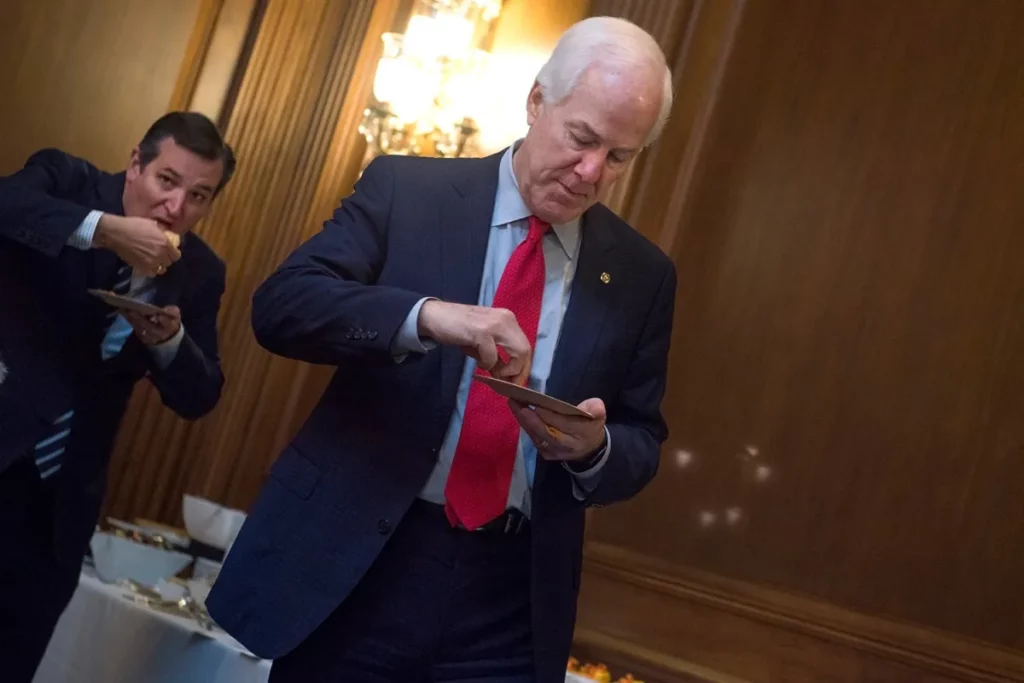
They trace it to a restaurant named Mexico Chiquito, they maintain an official state Cheese Dip Trail, and they host an annual World Cheese Dip Championship. When the national press wrote about the claim in 2016, the two states’ United States Senate delegations staged blind taste test in the Senate lunchroom to settle the matter. Arkansas’s senators beat the Texans and that meant that they had scientifically decided who’s came first.
Okay, so first thing’s first, the founders of Mexico Chiquito, the Donnellys, were Texans. Before opening in Arkansas they ran a Mexico Chiquito in Kilgore, Texas. And there are accounts of a queso dip being served in San Antonio 30 years before that restaurant was opened.
But honestly, I don’t need to pull out Facts™ and Logic™ for this one. It’s pretty obvious that Arkansas is so desperate for a food culture of their own that they tried to steal some low hanging fruit dairy product from Texas they thought nobody would ever miss.
Ruston is not exactly a culinary capital either, but at least we reside in a state that has much more to offer than a dip.
Reason 4: State of Grammatical Emergency
Grievance Rating: 3/10
In 1881, the Arkansas General Assembly passed a resolution, still on the books today as Arkansas Code § 1-4-105, that legally declares the one true pronunciation of the state’s name: three syllables with a silent final “s.” It even scolds the alternative directly: pronouncing it “ar-KAN-zas” is described, in the actual text of the law, as “an innovation to be discouraged.”
There’s no penalty and nobody will arrest you. It’s illegal in the same way tearing the tag off a mattress is.
But Arkansas was so consumed by insecurity over its own name that it convened both houses of its legislature to litigate a vowel sound.
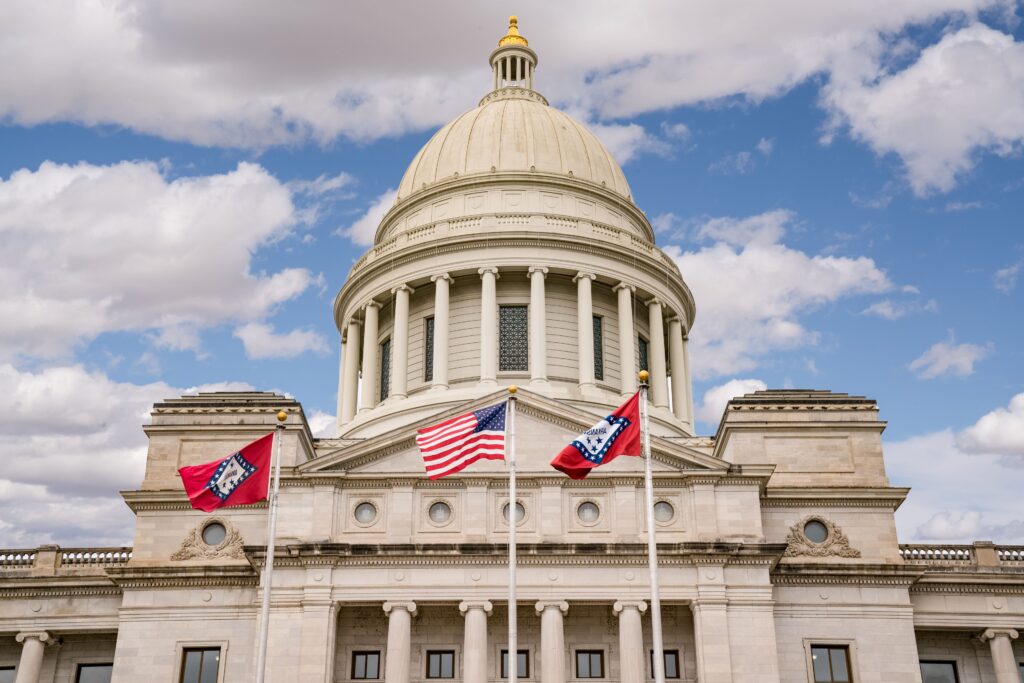
If you think that’s a one-time thing, know that in 2007 the legislature went back and formally settled the possessive form too, declaring it should be written “Arkansas’s” instead of “Arkansas’.”
I wonder what’s next, a statewide referendum on the Oxford comma?
Reason 5: Beating Plowshares Back into Swords
Grievance Rating: 7/10
Let’s zoom back into Jonesboro, where the city nickname is the City of Churches.
That sounds pleasant until you think about what it actually means. A large number of churches is not exactly a sign of a community in harmony. Instead it means nobody can agree with each other long enough to sit in the same sanctuary.
And Jonesboro has a bit of documentation on this point.
In 1930, an actor-comedian turned traveling evangelist named Joe Jeffers came to town for a tent revival at First Baptist Church. He was such a hit that the congregation tried to make him their pastor. An opposing chunk of the church objected, revolted, and installed a different pastor. Jeffers left in a huff, only to come roaring back the next year to run a rival tent revival.
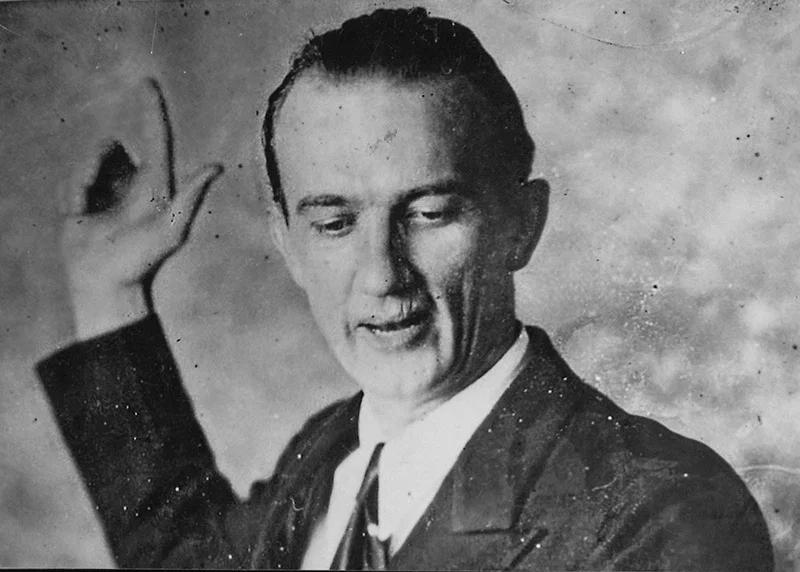
What followed is what Time Magazine at the time called the “Battle of Jonesboro.” By 1931 Jeffers was preaching that the Second Coming would arrive the next year and accusing both the rival pastor and Jonesboro Mayor Herbert Bosler of immorality from the pulpit. A brawl broke out at First Baptist that September, a Jeffers supporter was arrested as the instigator, and the next morning Jeffers and five hundred followers turned up on the courthouse steps to protest, singing hymns.
When Mayor Bosler told them to knock it off, Jeffers asked if he could pray instead. Jeffers was granted the floor for four minutes, and knelt there until Mayor Bosler informed him that his four minutes were up.
Jeffers responded the same way any of us would – by asking God to strike the mayor dead. And when no lightning bolt came, his congregation assulted both Mayor Bosler and the police chief on those courthouse steps.
The governor, understandably, sent in the Arkansas National Guard. One Guard captain telegrammed the governor warning that “thousands of lives are endangered… Declare martial law now or shoot down 1,000 church members with machine guns.”
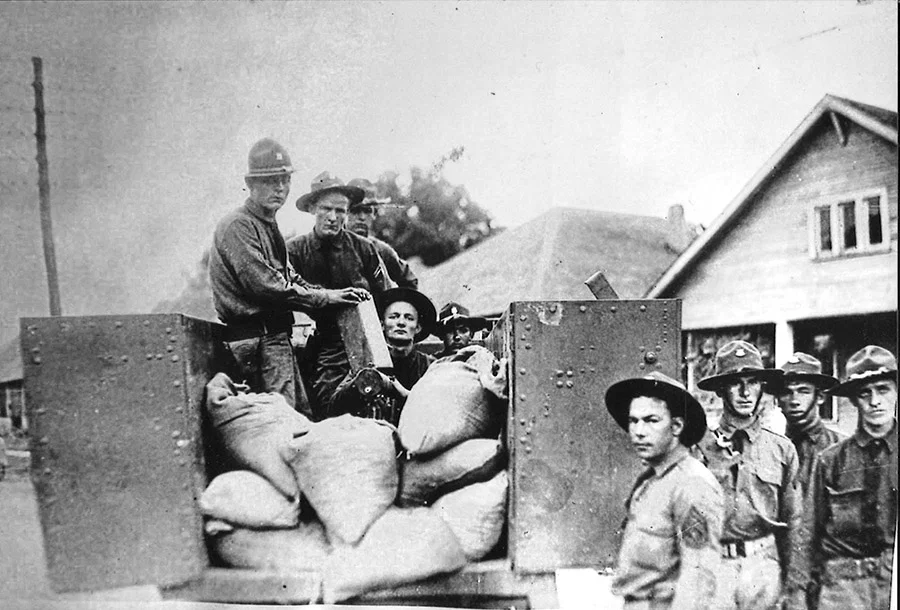
And it didn’t stop there. Rival factions of Baptists brawled with shovels, pitchforks, and firearms.
At one point two congregations held services in the same building at the same time. A later shootout over control of the church left one Jeffers supporter dead. The opposing pastor was tried for murder, nearly assassinated in his jail cell, then later acquitted.
Jeffers eventually left town and reinvented himself as the leader of a group devoted to something called Pyramid Power Yahweh, a whole different controversy I invite you to Google.
Reason 6: Faux-ssils
Grievance Rating: 4/10
Jonesboro sits on Crowley’s Ridge, a long, skinny geological rise that runs through northeast Arkansas (yes, that Crowley’s Ridge, Matt).
In 1923, a Jonesboro gunsmith and jeweler named Dentler Rowland began selling stone artifacts he claimed to have dug out of the ridge. It was evidence, he said, of a lost ancient civilization. He described unearthing a small casket buried ten feet down, ringed with carved figures. The centerpiece was a carved bust he called King Crowley. He kept the operation going into the 1930s and produced around eighty pieces.
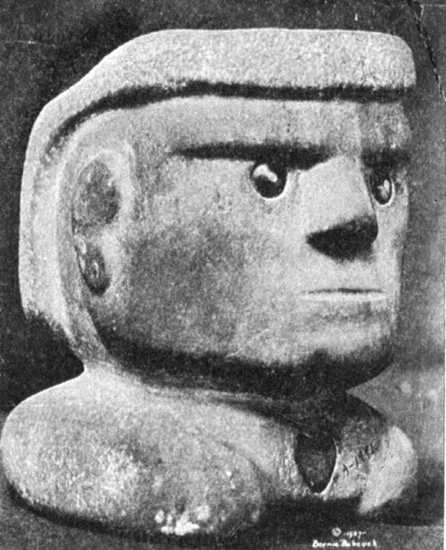
In retrospect, it was pretty obvious these were fakes. This lost civilization of the Arkansas Delta had apparently carved statues of a camel and a hippopotamus, which are notably, not from Arkansas. This was during the height of the King Tut craze, and it seems Rowland built his fictional lost civilization with a simple copy-and-paste.
When six of the pieces were sincerely sent to the Smithsonian, the institution had to break the bad news and declare them “unclassifiable and of modern origin.” The second-largest surviving collection of the King Crowley fakes, three dozen pieces, is housed today at the museum on the Arkansas State campus.
You know, some schools display trophies instead.
Reason 7: Lobos Rojos
Grievance Rating: 4/10
In 2017, not too far from a site of actual relics, Arkansas State opened a campus in Querétaro, Mexico.
The stated reason for the south-of-the-border campus was profile. Back when the project was pitched to the Board of Trustees, system president Chuck Welch said a campus in Querétaro would be a chance to significantly raise Arkansas State’s standing on the national and international scene. He assured the board that conservative projections had it self-sustaining on tuition alone.
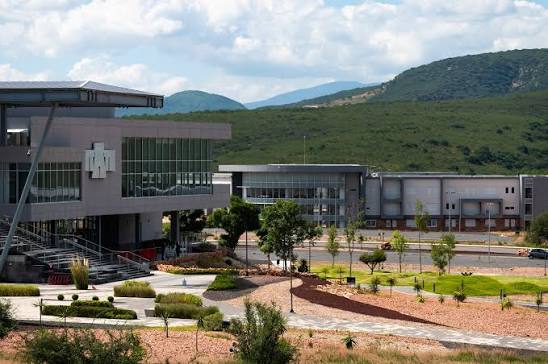
What Arkansas State really signed up for was a licensing deal. The Mexican foundation put up the money, built the buildings, and collects the tuition. Arkansas State supplies the name, the accreditation, and the curriculum, and gets paid a commission on every student who enrolls. “Red Wolves for rent,” more or less.
The commission scales with enrollment, and the numbers that got the board excited were the big ones: $1.39 million a year at 2,100 students, $8.87 million at five thousand.
The opening class was two hundred and fourteen. Eight years later the campus is at about 900, which means it still not even halfway to the first rung on that commission ladder.
But regardless of if Arkansas State ever got a meaningful check, I still consider them sell outs for franchising their brand.
The Reunion
Before the Sun Belt, before Conference USA, before the WAC, Louisiana Tech and Arkansas State shared the Southland, then were charter members of the American South Conference together all the way back in 1987. When that league folded into the Sun Belt in 1991 (in all sports except football), these two schools went into the Sun Belt together and stayed there until 2001. Now, after 25 years, the Bulldogs and Red Wolves are back together under that same banner.
Welcome back to the schedule, Arkansas State. Just make sure you put the right Jonesboro in the GPS on the drive home from Ruston, after your inevitable loss on November 21st.