
This is the second entry in our recurring series making the case for why we should care about each of Tech’s new Sun Belt conference mates. This week, we go south instead of east.
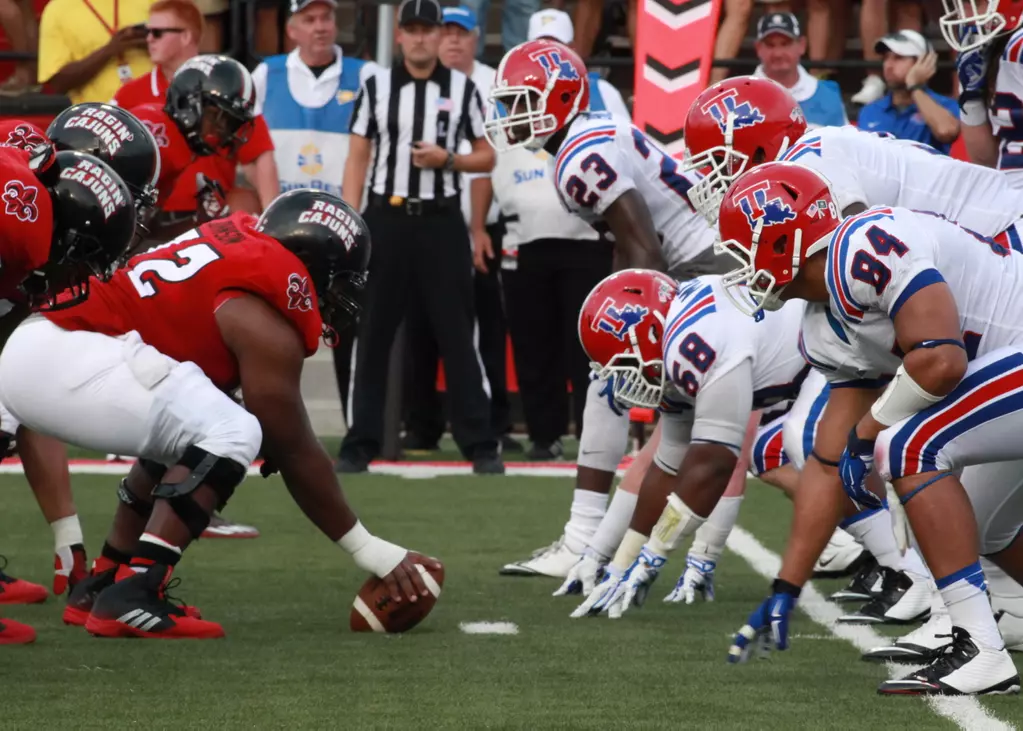
With Louisiana Tech in the Sun Belt now, the Bulldogs get the Ragin’ Cajuns back on the schedule in every sport, every year. Football renews first, with the Cajuns visiting Ruston on October 10, 2026, the two schools’ first conference meeting since 1995.
While ULM was a reunion with a neighbor Tech has spent 70 years beating. Lafayette is different. This is an old, ugly, genuinely competitive rivalry that ran nearly every year from 1924 to 2000 and then got shelved for a quarter century. But now it’s back. So here is why Louisiana Tech fans should hate the school that wants to call itself just “Louisiana.”
Reason 1: The Self-Proclaimed Flagship
Grievance Rating: 9/10
Let’s get this out of the way. There is no “University of Louisiana.” There is no flagship to the University of Louisiana System, the same way that the Louisiana State University and Agricultural and Mechanical College in Baton Rouge is the flagship of the LSU system (and can therefore call themselves LSU).
The Cajuns have been chasing this for a long time. Back in 1984, the school then called Southwestern Louisiana tried to rename itself the University of Louisiana without bothering to ask the legislature, and the state made them change it back within a month. When they finally got a new name in 1999, it was University of Louisiana at Lafayette, with the “at Lafayette” part being non-negotiable. The UL System’s own naming policy explicitly bars any member school from dropping its city, from going by a bare “UL,” and from ever calling itself a “flagship,” “lead,” or “main” campus. Every school in the system is supposed to be equal.
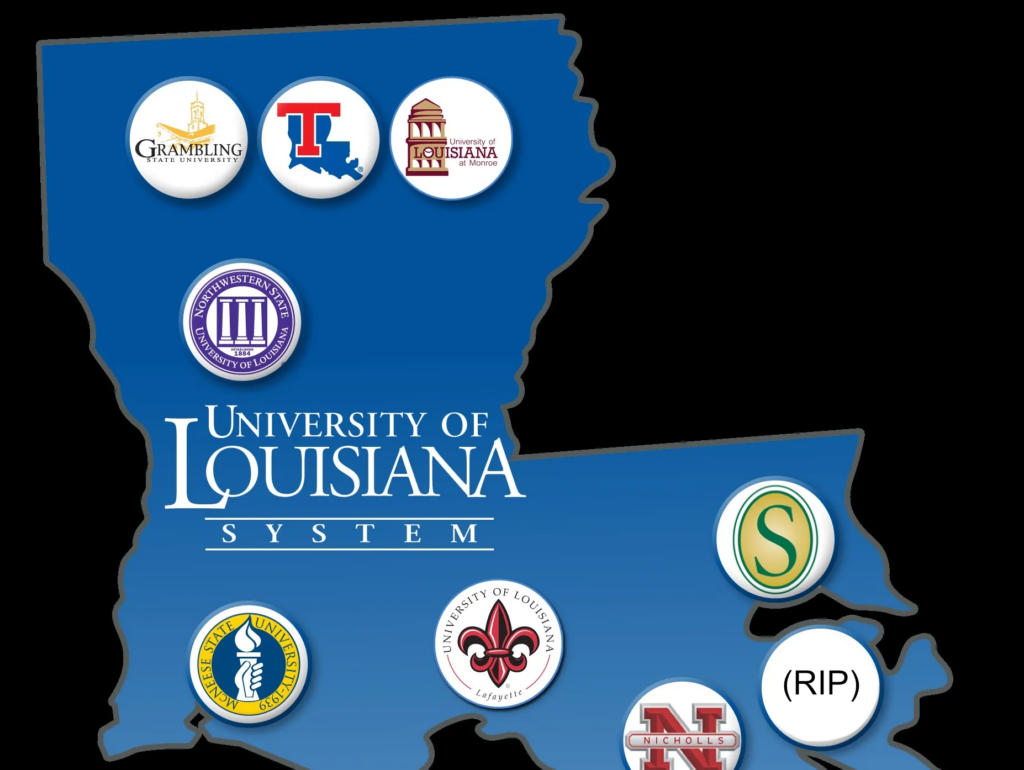
So Lafayette played cute. They started branding the athletic program as simply “Louisiana,” registered louisiana.edu, and asked everyone not to use “ULL.” The school wasn’t technically renaming the institution, just the sports teams, which kept it arguably on the legal side of a policy it was whole-heartedly violating in spirit completely.
And we’ve documented the full, maddening saga here.
Reason 2: A Rivalry With a Pulse
Grievance Rating: 8/10
As we said last week, ULM feels like a little brother. And it’s hard to truly hate a little brother. But it’s much easier to hate a team that you’ve been a bit more competitive with.
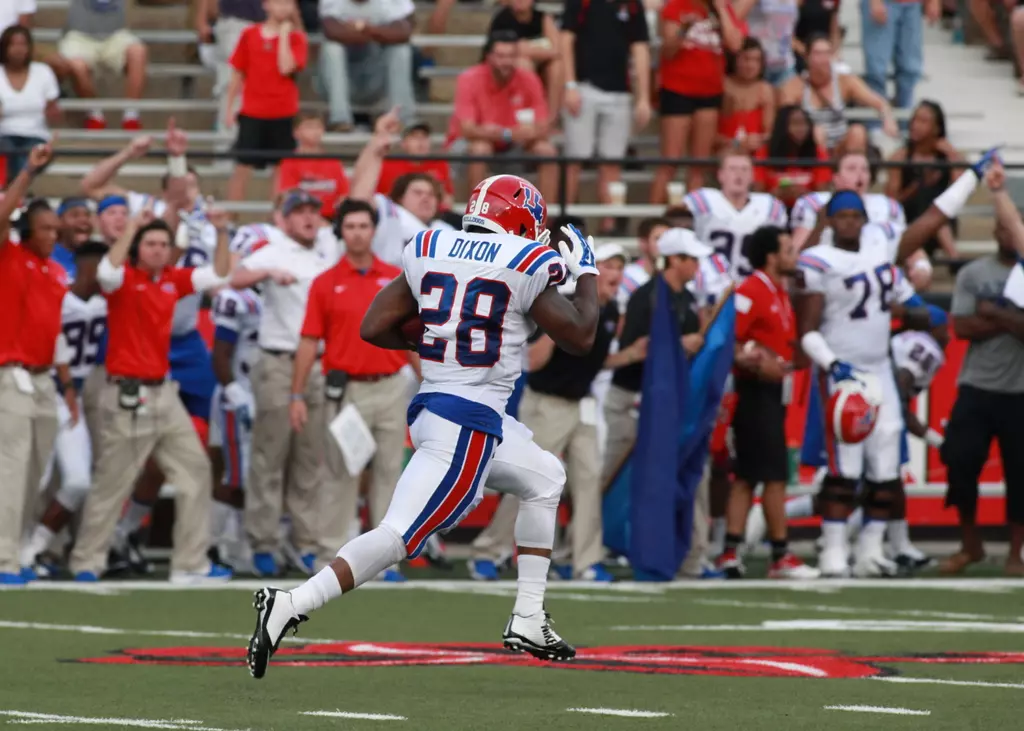
Let’s start with the good news. Football belongs to Tech, 48-33-6 all-time, and the Bulldogs haven’t lost to the Cajuns since 1997. The last eight meetings all went Tech’s way, including a 2014 48-20 beatdown in Lafayette that the Cajuns were so sure about, they invited the Bulldogs’ recruits to the game.
Men’s basketball leans Tech too, 93-77 across more than a century, a series interrupted only by World War II and by the two seasons Lafayette wasn’t allowed to field a team (more on that in a minute). The Lady Techsters own their side outright, by a lopsided 41-3.
But baseball sadly leans towards the Cajuns, who lead the all-time series 71-59, thanks in part due to a genuine golden age for the ULL baseball program. Under Tony Robichaux, who ran the program from 1995 until his unfortunate passing in 2019, Louisiana-Lafayette went to twelve NCAA Regionals, four Super Regionals, and in 2000 made the College World Series, finishing tied for third in the country.
Louisiana Tech has never been to Omaha. But the Cajuns have, and their best-ever team, the 2014 club that went 58-10 and at one point was ranked #1 in college baseball, came a game short of going back.
And it stings more because of where Tech’s program was during those same years. The Bulldogs did not reach an NCAA Regional once from 1987 to 2016, a thirty-year drought that Greg Goff was finally able to break.
And that baseball success can be the difference between a neighbor like ULM and a rival like ULL.
Reason 3: The Serial NCAA Offender
Grievance Rating: 7/10
It probably goes without saying that Louisiana Tech has never received the NCAA death penalty. Louisiana-Lafayette has the distinction of being one of only five programs in history that has.
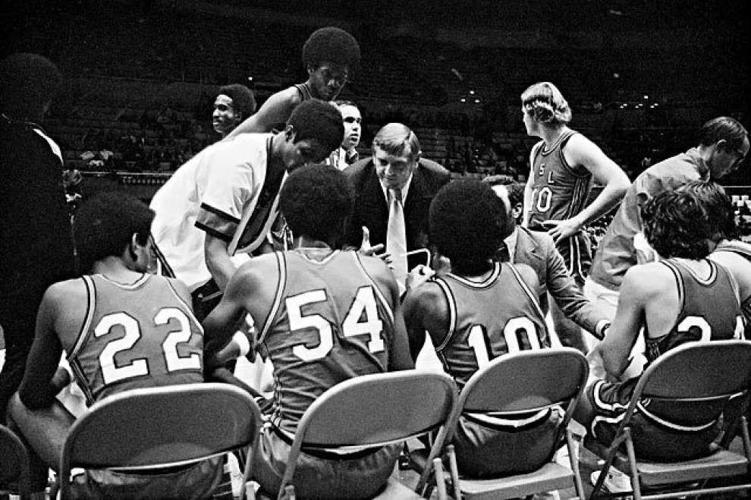
In August 1973, the school then known as Southwestern Louisiana was found guilty of more than 125 rules violations in its basketball program. Most were small-time: cash to players, borrowed cars from coaches and boosters, university credit cards used for gas and clothes. But the worst of it was outright academic fraud. An assistant coach altered a recruit’s high school transcript and forged the principal’s signature, and others arranged for stand-ins to take college entrance exams for prospective players.
The 1973-74 and 1974-75 seasons were canceled entirely, the only multi-season shutdown ever handed to a Division I member. It vacated two Sweet Sixteen tournament runs, banned the whole athletic department from postseason and live TV for four years, and stripped the school’s NCAA voting rights.
The NCAA Council was ready to go further still: it formally recommended expelling Southwestern Louisiana from the association altogether, and only a vote of the membership downgraded the punishment to a mere death penalty.
It is worth mentioning that there was more to this story than just paying players. Coach Beryl Shipley was one of the first coaches in the Deep South to field Black players. When the state refused to let public money fund scholarships for those players, Shipley had local Black leaders raise the money instead, which broke NCAA rules. And Coach Shipley deserves to be commended for that effort. But the manufactured test scores would have alone justified the death penalty.
And the Cajuns weren’t done breaking the rules either. In 2007 the NCAA caught them again, vacating 43 games across the 2004 and 2005 seasons, including two more NCAA Tournament appearances, after a player was kept eligible with correspondence courses that didn’t count. The result of all this: Louisiana-Lafayette has “appeared” in ten NCAA Tournaments and the record book only recognizes six.
And it’s easy to hate a cheater.
Reason 4: And Speaking of Cheating
Grievance Rating: 5/10
From 2011 to 2014, a ULL assistant football coach named David Saunders steered recruits to a testing site in Waynesboro, Mississippi, where their ACT scores were doctored. When it came out, the NCAA vacated 22 wins, two New Orleans Bowl victories, and the 2013 Sun Belt championship. Head coach Mark Hudspeth’s record fell from a sparkling 51-38 to 29-38.
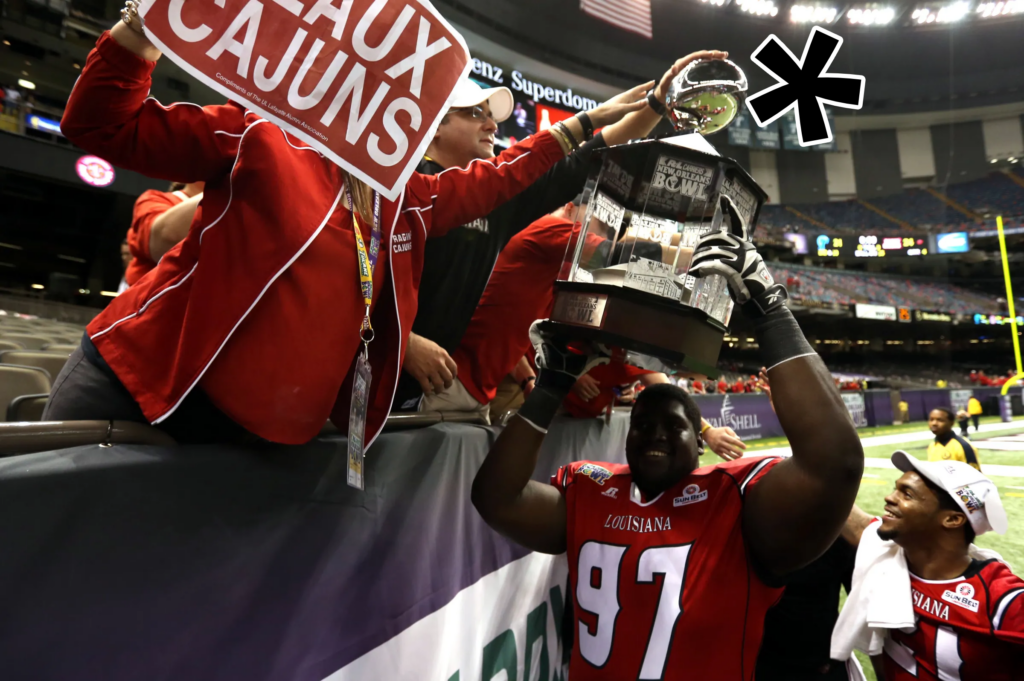
What makes this funnier (and worthy of its own category) is that Louisiana-Lafayette turned around and sued ACT, Inc. claiming that the testing company failed to use reasonable precautions to prevent or detect fraud.
A program caught cheating on standardized tests decided the real villain was the standardized test company. It takes a special kind of misplaced bravado to get caught with your hand in the cookie jar and then sue the bakery for not locking the lid.
Reason 5: They Can't Share Either
Grievance Rating: 4/10
In 2020, the Sun Belt championship game between Louisiana-Lafayette and Coastal Carolina was canceled after a COVID outbreak in Coastal’s program. With no game to play, the conference named both schools co-champions, so Lafayette got a legitimate, if shared, piece of the title. That should have been the end of it.
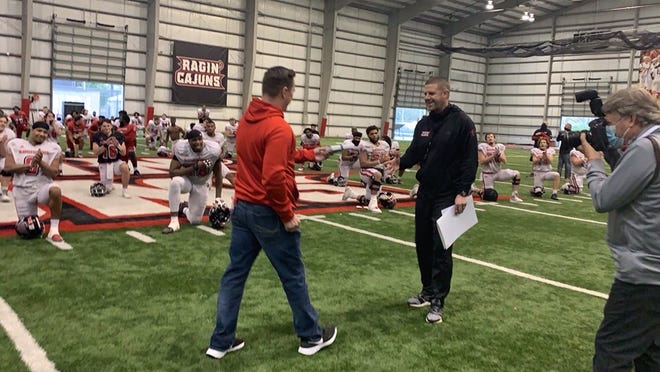
It was not. The mayor-president of Lafayette issued an official government proclamation declaring the Ragin’ Cajuns the sole 2020 Sun Belt champions.
And you read that right, the lead executive in Lafayette is called the “mayor-president.” Because the city, just like the school, is all about using nomenclature to try to sound bigger and better than they really are.
But anyway, the mayor-president also handed leader-coach Billy Napier a key to the city-parish for “winning” the 2020 Sun Belt championship. I am curious if it only unlocks half of the doors in Lafayette.
Reason 6: The City Itself
Grievance Rating: 4/10
Speaking of Lafayette, let’s talk a little more about location.
Cajun fans love to point out that Ruston is a small town. And they’re not wrong. Ruston is about 22,000 people, a college town where the biggest traffic jam is probably a train crossing on a game day. We know and we like it that way. But there’s a certain nerve in a Lafayette fan sneering at small-town life, because Lafayette isn’t the metropolis they seem to think it is.
Lafayette is the fourth or fifth largest city in Louisiana, which is to say big enough to have traffic and a dying mall, but not big enough to be interesting. It’s the “Hub City of Acadiana,” but really only by default.
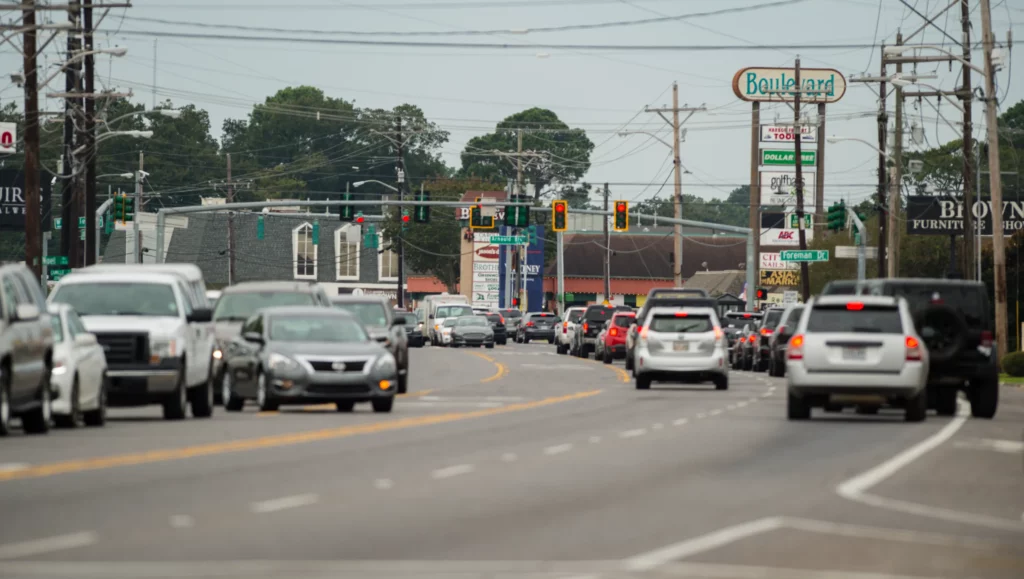
Don’t just take my word for it – drive in on Johnston Street sometime and try to enjoy the “view.” Ryan Pecot, a retail development adviser in Lafayette, called the corridor the backbone of the community and, in the same breath, “ugly as shit,” adding that everybody knows it. Mayor-President Monique Boulet has said the street is stagnant, and that the stagnation is depressing.
And they’re right. Lafayette is a miles-long jungle of utility poles, billboards, and half-empty strip malls, stitched together by some of the worst traffic in the state.
And that’s fine, I don’t have to live there. But don’t throw stones from a glass house wrapped in Dudley DeBosier ads.
Reason 7: The Great Beaver Race
Grievance Rating: 3/10
There is no clearer measure of civic pride in modern America than the arrival of a Buc-ee’s, the over 70,000-square-foot temple of beaver nuggets and spotless restrooms that turns a highway exit into a destination. When Buc-ee’s first announced it was coming to Louisiana, back in 2023, it was coming to Ruston, off I-20 at the Tarbutton exit.
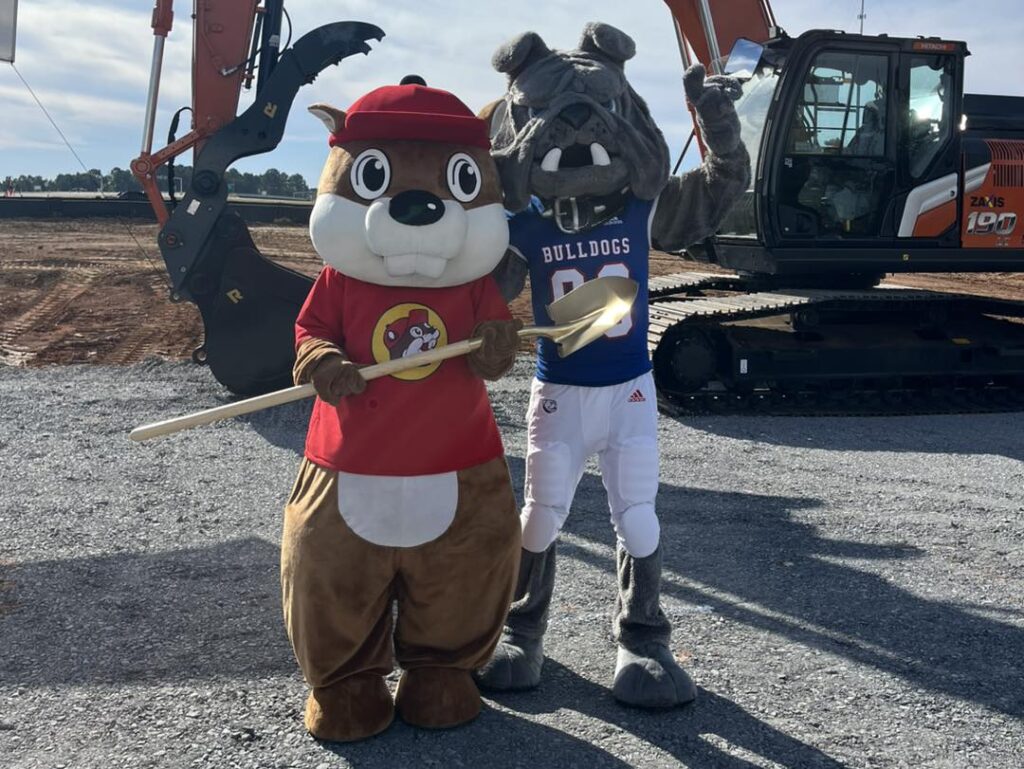
Then, more than a year later, in December 2024, Buc-ee’s announced a second Louisiana store.
In Lafayette.
If it feels familiar, it should. This is the same Lafayette that called their sports teams the Bulldogs from 1921 into the 1970s, before moving on to become the Ragin’ Cajuns. They copied our nickname and now they’re copying our beaver.
But what do they say about the sincerest form of flattery again?
The Reunion
Louisiana Tech and Louisiana-Lafayette last met on a football field in 2015, a 43-14 beatdown in Ruston. Now they’re conference mates again, in every sport, every year, and it starts with football October 10 in Ruston.
We finally share a conference again. Let’s settle who the state actually belongs to.